
responsive web app

Overview
Goal: Create a seamless, community-driven experience that allows users to connect with trusted local experts in their own language — anytime and anywhere — to navigate challenges when relocating or traveling abroad.
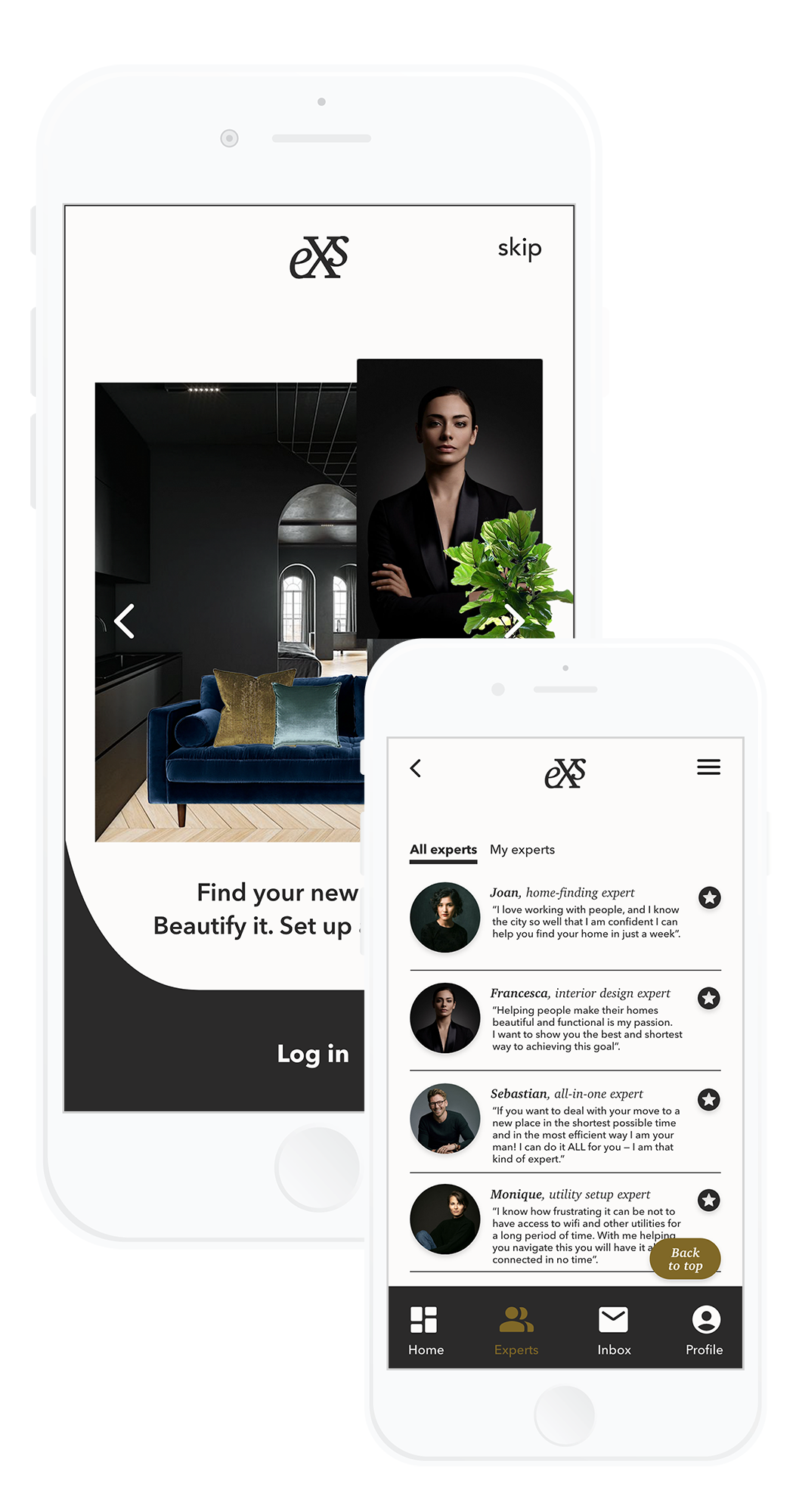
My solution: Expert for Expats provides a simplified home-finding and settling-in experience by giving users fast, direct access to knowledgeable local experts. The platform enhances confidence, reduces friction, and supports users through key moments of transition.
Role: As the sole designer, I led the end-to-end process: user research, journey mapping, persona development, wireframes, prototypes, UI design, and usability testing. Tools included Adobe XD, Illustrator, and Photoshop.
The final prototype is accessible here.
Disclosure: All images used in this project were sourced from Pinterest, including portrait photography credited to Tausha Dickinson, Alpana Aras, and Maciek Krula.
user research
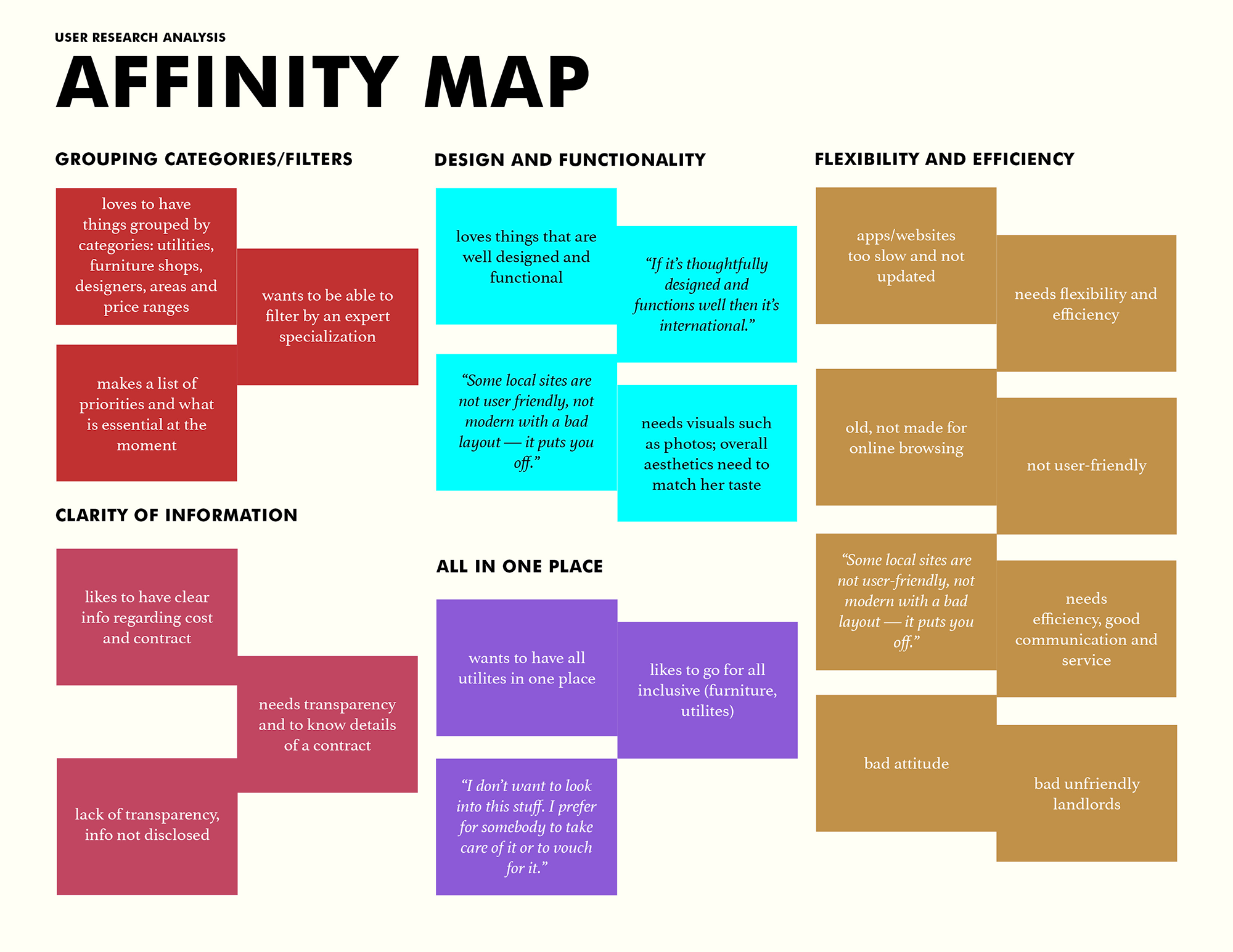
To understand users’ goals and challenges when relocating to a new country, I conducted qualitative research that combined user interviews and contextual inquiries. I spoke with three participants — Lamia, Cristina, and Katerina — all of whom had recently searched for housing abroad and navigated the process of setting up a new home.
The research focused on:
➭ Understanding user behavior around finding a home and handling setup tasks (utilities, furnishings, design) in a new country
➭ Identifying the most important features users look for when searching for local, home-related information
➭ Clarifying which tasks users would prefer to complete directly through an expert-driven app
These insights informed the development of two user personas that represent the platform’s primary user groups.
user persona

user journey

user flow
low-fidelity wireframes
To support the needs of my primary persona — who values clarity and simplicity — I designed a benefits-focused onboarding flow. The onboarding consists of three swipe-through screens that clearly communicate:
➭ what the app does
➭ how it fits into the user’s daily life
➭ the value it provides
Rather than forcing sign-up at the start, I allow users to explore the product before creating an account. A “Skip” option offers a direct path into the experience, giving users control and reducing early friction.

usability testing
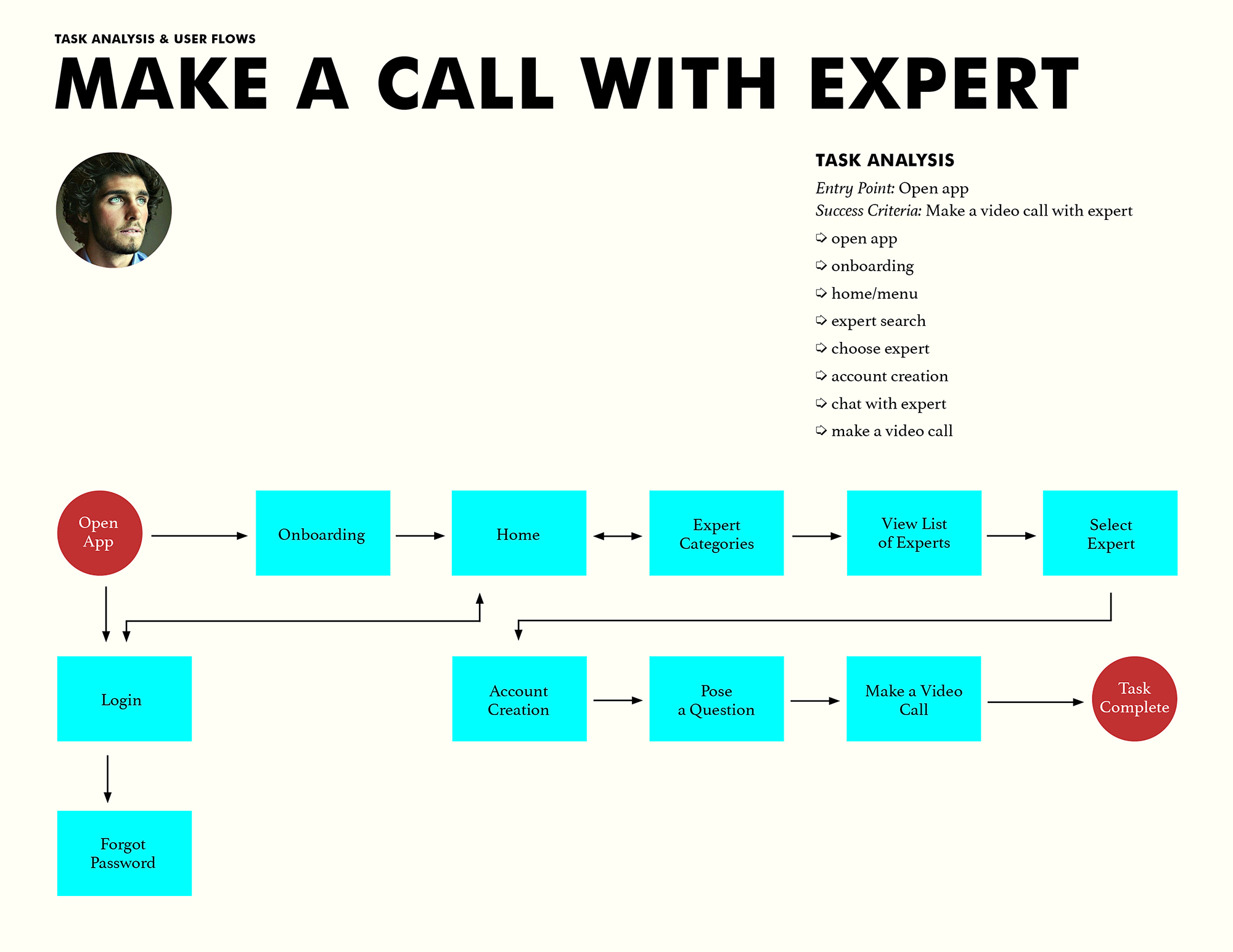
For usability testing, I recruited six participants (four in person and two remotely). The goal was to assess how easily new users could understand the app’s purpose, navigate the interface, and complete core tasks such as searching for experts and logging in.
Across mobile and desktop tests, I observed participants’ comprehension of the value proposition, their interaction patterns, and any friction points that emerged. The findings — including key observations, usability issues, and opportunities — were synthesized into structured analysis sheets that informed the iterative improvements leading to the final prototype.
high-fidelity wireframes

final prototype
You can access the final prototype by clicking here.